
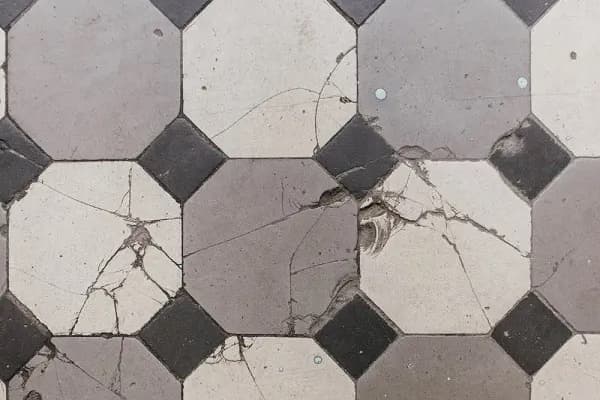
How one tile comes out without wrecking six
The careful version goes like this: the grout around the cracked tile gets cut out completely first, because grout is what ties it to its neighbors, and skipping this step is how one cracked tile becomes three. Then the damaged tile is broken up from the center outward, working toward the edges, never prying against the surrounding tiles. The old adhesive gets scraped flat, the new tile goes in on fresh thinset, and new grout gets blended in. Done right, you can't find the repair in a week. Done impatiently, you're shopping for three tiles instead of one. Patience is the entire skill, which suits Ken fine.
The matching problem, and the honest answer about discontinued tile
Here's the part that decides more repairs than the labor: tile lines get discontinued constantly, and the tile in your 2009 bathroom may simply not exist for sale anymore. Your options, in order of preference. Best: you have spares in the garage or basement, because builders often leave a partial box, so go look before anything else. Good: the line still exists, and Ken can source it. Workable: a close match exists, and in a floor with pattern variation it disappears fine. And when none of those work, the honest choices are pulling a donor tile from somewhere hidden, like under the fridge or inside a closet, and putting the mismatch there instead, or making the replacement intentional with a small deliberate accent. What Ken won't do is install an almost-match in the middle of your kitchen floor and tell you nobody will notice. You'd notice. That's the whole reason you called.
The question that matters more: why did it crack?
Tile is hard but brittle, and it doesn't crack from foot traffic. It cracks because something under it moved or was never right: a hollow void in the adhesive under that spot, a subfloor with too much flex, a house settling seasonally the way Kansas City houses on clay soil do, or something heavy dropped, which at least is a one-time cause. Before replacing, Ken taps the surrounding tiles listening for hollow spots and checks whether the crack runs through several tiles in a line, which points to movement below rather than bad luck. Replacing a tile over a moving problem means replacing it again next year, and he'd rather tell you that up front than book the rematch.
Cracked grout is a different animal
If it's the grout lines cracking or crumbling rather than the tile itself, that's usually a better story: grout can be raked out and regrouted, and where tile meets tub or wall, the joint should actually be flexible caulk, not rigid grout, which is why those corners crack over and over. It's a smaller fix, it refreshes the whole room more than you'd expect, and it's honest to say so instead of upselling you to tile work you don't need.