
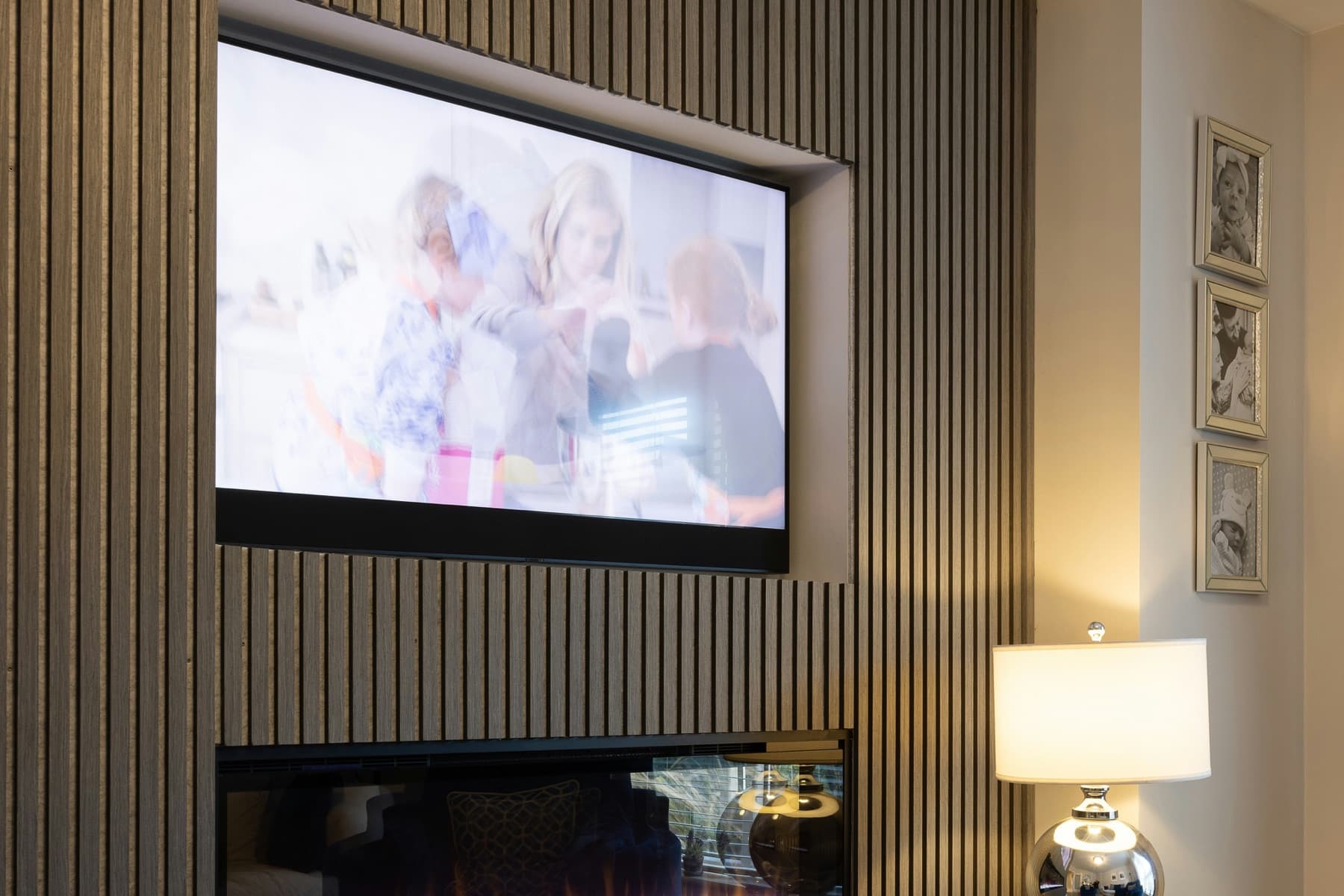
The heat question, answered with a real test
Electronics hate sustained heat, and TV warranties can exclude heat damage. Whether YOUR fireplace is a problem depends on what it throws upward, and there's a simple test: run the fireplace the way you actually use it for 30 to 45 minutes on a cold day, then tape a thermometer to the wall where the middle of the TV would hang. Most manufacturers want the TV's environment staying under roughly 100°F, and your manual states the exact number. A modern sealed gas unit with a good mantel deflecting airflow often passes easily. A big open wood-burner can fail by a lot. The mantel matters too: a deep mantel between firebox and TV pushes rising heat out into the room instead of straight up the wall. No mantel and an aggressive fireplace? That's usually where Ken suggests plan B.
The neck problem nobody mentions until it's hung
Sit on your couch and look at where the TV would be. Now hold that pose for a three-hour game. Fireplace mounts put the screen well above eye level, which is why the fix is either accepting the angle, or using a full-motion or pull-down mount that brings the screen down and out when you're watching and tucks it back when you're not. Those mounts are heavier, cost more, and demand serious anchoring, which brings us to the wall itself.
Brick, stone, and what's actually behind your fireplace wall
This is where fireplace mounts go wrong in DIY hands. Above a fireplace you're rarely anchoring into simple studs: it's brick, stone veneer, or drywall furred out over masonry with a gap behind it. Brick takes masonry anchors set into the brick body (not the crumbly mortar joints), stone veneer sometimes can't carry a cantilevered load at all, and furred walls need hardware that reaches through to something structural. Ken drills into what he's confirmed, uses anchors rated far beyond the TV's weight, and won't hang a 70-pound screen with a moving arm on hardware he wouldn't trust over his own head. That's the standard thirty years of inspections builds into a person.
The honest wiring note
A clean fireplace install usually means no visible cords, and there are two ways there. Surface channels painted to match are simple and Ken-installable same visit. Actually putting a new electrical outlet behind the TV is licensed electrician work, and Ken will tell you that instead of fishing a power cord through your wall against code, because code exists precisely because power cords in walls start fires. Low-voltage lines like HDMI are a different story and fair game. If the full hidden-outlet look is the goal, he'll coordinate the sequence so the electrician and the mount happen in the right order.
So what would Ken do in your house?
Run the thermometer test. If the wall passes and you're set on the look, a quality pull-down or full-motion mount anchored properly gives you the fireplace look AND a watchable height, and that's a great install. If the wall fails the heat test or the room's geometry fights you, the wall beside the fireplace with a low media console often looks just as intentional and watches far better. He'll tell you which one your room is, even when the answer is the smaller job.